
← Annual ConferencePast Edition · 2023Rhodes, Greece
Fourth International Conference on the Mathematics of Neuroscience and AI
Rhodes, 2023
28th September - 1st October, 2023. Old Town, Rhodes. Virtual or in-person..
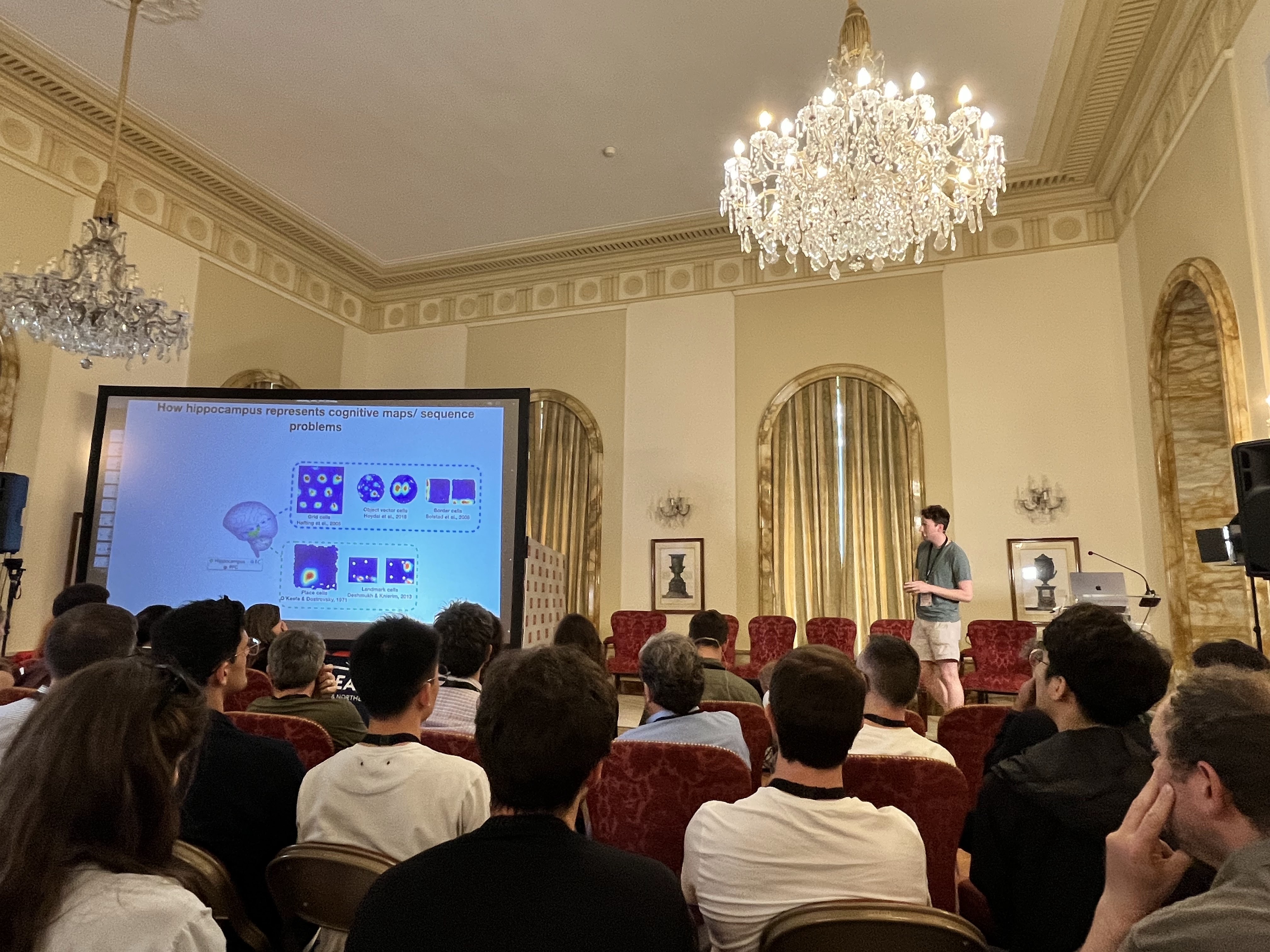
Two decades into the 21st century, can we claim to be any closer to a unified model of the brain?

In this exploratory symposium, we invite submissions for short talks and posters presenting general mathematical models of brain function. We give priority to those models that can account for brain or behavioural data, or provide simulations to that effect.

Keynote Speakers
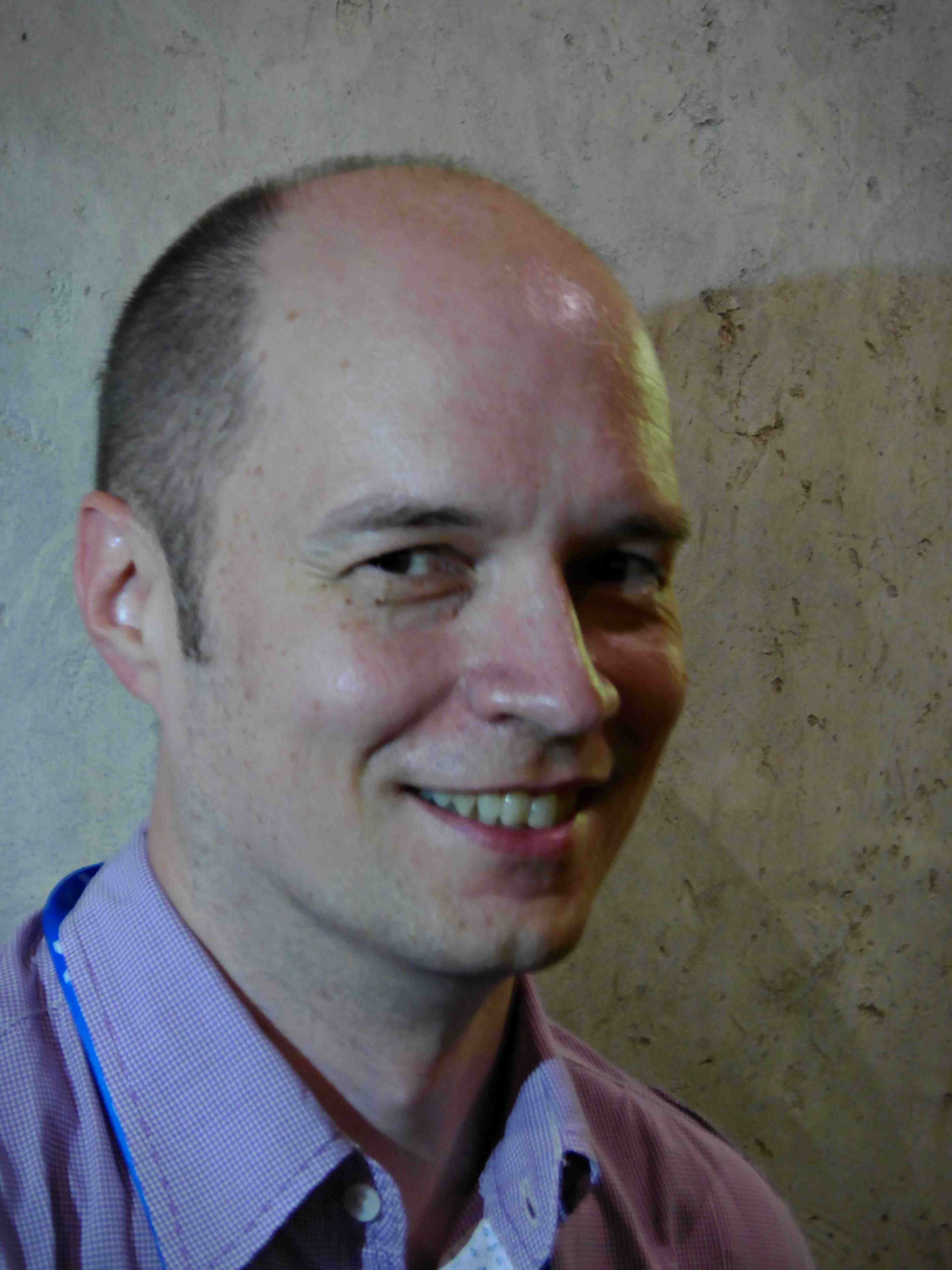
Professor Aapo Hyvärinen
Keynote
Professor Aapo Hyvärinen
University of Helsinki
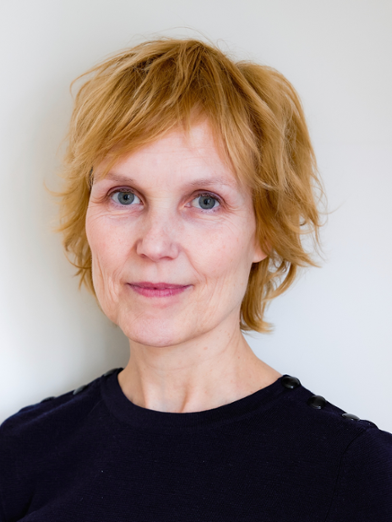
Professor Janneke Jehee
Keynote
Professor Janneke Jehee
Donders Institute
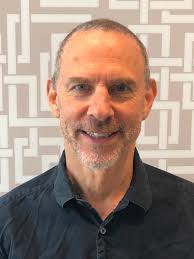
Professor Peter Latham
Keynote
Professor Peter Latham
Gatsby Unit, UCL
Session 1 · 28th September

Probabilistic Models

How should an intelligent agent behave in order to best realize their goals? What inferences or actions should they make in order to solve an important computational task? Probabilistic models aim to answer these questions at an abstract computational level, using tools from probability theory and statistical inference.

In this session we will discuss how such optimal behavior should change under different conditions of uncertainty, background knowledge, multiple agents, or constraints on resource. This can be used to understand human behavior in the real world or the lab, as well as build artificial agents that learn robust and generalizable world models from small amounts of data.

Session Chairs
  • Dr Ruairidh M. Battleday (Oxford)
Keynote Talks
  • Professor Aapo Hyvärinen (University of Helsinki): Painful Intelligence: What AI Can Tell Us About Human Suffering
Invited Talks
  • Dr Ruairidh Battleday (Oxford University): Probabilistic Models of Cognition and Machine Learning: Past and Future Directions
  • Professor Bill Thompson (University of California, Berkeley): Distributed Computation by Social Learning
Spotlight Talks
  • Professor Volker Tresp (Munich Center for Machine Learning): The Tensor Brain: A Unified Theory of Perception, Memory and Semantic Decoding
  • Professor Daniel Graham (HWS): Collision Models of Brain Network Communication
  • Rahul Jain (Pomona College): You Got Hexxed: Persistence during Complex Skill Learning
Session 2 · 30th September

Neurotheory

While neuroscientists have increasingly powerful deep learning models that predict neural responses, it is not clear that these models are correspondingly increasing our understanding of what neurons are actually doing. In this session, we will take a more mechanistic approach to understanding how networks of neurons afford complex computations, both by both considering mechanistic neural model along with mathematical theories that say how neurons should behave and crucially why they behave that way.

Session Chairs
  • Dr James Whittington (University of Oxford; Stanford University)
Keynote Talks
  • Professor Peter Latham (Gatsby Unit, UCL): What's the Question and How Do We Answer It?
Invited Talks
  • Dr James Whittington (University of Oxford; Stanford University): A unifying framework for frontal and temporal representation of memory
  • Dr Thomas Parr (University of Oxford): From models to maladies
Spotlight Talks
  • Dr Tommaso Salvatori (Verses.ai): On the past, present and future of predictive coding
  • Carol Upchurch (Louisiana State University): Persistent Silencing of PV+ Inhibitory Interneurons Results from Proximity to a Subcritical Hopf Bifurcation
  • Tyler Giallanza (Princeton University): Adapting to a changing environment with controlled retrieval of episodic memories
  • Declan Campbell (Princeton University): Unraveling geometric reasoning: A neural network model of regularity biases
Session 3 · 28th September

Biocomputation

The prevailing modern scientific paradigm of the brain is a computational one. But if the brain is a computer—which is an 'if'—it must have operating principles, abilities and limitations that are radically different to those of artificial computers. In this session, talks will explore diverse topics within quantitative neuroscience that consider the brain as a device for computation, broadly conceived.

Session Chairs
  • Professor Dan V. Nicolau Jr (King's College London)
Invited Talks
  • Professor Dan Nicolau Sr (McGill): Setting The Baseline Of What Intelligence Could Be: The Case Of Space Searching By Populations Of Filamentous Fungal Hyphae
  • Professor Andrew Adamatzky and Dr. Panagiotis Mougkogiannis (University of the West of England): Towards Proteinoid Neuromorphic Computers
  • Dr Ilias Rentzeperis (Spanish National Research Council): Modelling A Continuum Of Simple To Complex Cell Behavior In V1 With The Inrf Paradigm
Spotlight Talks
  • Professor Marcelo Bertalmío (Spanish National Research Council): Modeling Challenging Visual Phenomena By Taking Into Account Dynamic Dendritic Nonlinearities
  • Dr Steeve Laquitaine (Swiss Federal Institute of Technology): Using A Large-scale Biophysically Detailed Neocortical Circuit Model To Map Spike Sorting Biases
  • Jia Li (KU Leuven): Self-organization Of Log-normally Distributed Connection Strength
  • Hanna Derets (University of Waterloo): Distance Metrics and Minimization of Epsilon Automata, with Applications to the Analysis of EEG Microstate Sequences
Session 4 · 1st October

Representational Alignment

We may live in the same world but do we represent it in the same way? If not, then how do we still manage to effectively communicate and cooperate in a system about which we fundamentally disagree?

From Plato's Sophist to contemporary studies comparing LLMs to human brains, the study of diverging representations has fascinated researchers for millenia and continues to be an active area of research in neuroscience, cognitive science and machine learning.

In this session, we will discuss how we can measure and manipulate the representational alignment of (both biological and artificial) intelligent entities (e.g. humans and neural networks). We will also explore the implications of representational (mis)alignment between intelligent entities on their ability to communicate, cooperate and compete.

Session Chairs
  • Dr Ilia Sucholutsky (Princeton University)
Keynote Talks
  • Professor Janneke Jehee (Donders Institute): Probabilistic Representations In The Human Visual Cortex
Invited Talks
  • Dr Ilia Sucholutsky (Princeton University): How and Why We Should Study Representational Alignment
  • Professor Bradley Love (UCL): Aligning Embedding Spaces for Model Evaluation and Learning
  • Professor Iris Groen (University of Amsterdam): Are DNNs Representationally Aligned with Human Scene-Selective Cortex? Elucidating the Influence of Image Dataset, Network Training and Cognitive Task Demands
Spotlight Talks
  • Professor Mayank Kejriwal (University of Southern California): On Using Fodor's theory of Modularity for Situating Large Language Models Within a Larger artificial General Intelligence Architecture
  • Dr Andreea Bobu (Boston Dynamics AI Institute): Aligning Robot and Human Representations
Schedule

Thurs 28th September 2023 (UTC+3)

Session: Probabilistic Models / Biocomputation
Dr Ruairidh M. Battleday and Professor Dan V. Nicolau Jr
10.00Opening remarks. Dr Ruairidh M. Battleday and Professor Dan V. Nicolau Jr
10.30Keynote: Professor Aapo Hyvärinen. Painful Intelligence: What AI Can Tell us About Human Suffering
11.30Dr Ruairidh Battleday (Chair; Oxford University): Probabilistic Models of Cognition and Machine Learning: Past and Future Directions
12.00Professor Bill Thompson (University of California, Berkeley): Distributed Computation by Social Learning
12.30Lunch
13.30Professor Daniel Graham (Hobart and William Smith Colleges): Collision Models of Brain Network Communication
14.00Professor Volker Tresp (Munich Center for Machine Learning): The Tensor Brain: A Unified Theory of Perception, Memory and Semantic Decoding
14.30Rahul Jain (Pomona College): You Got Hexxed: Persistence During Complex Skill Learning
15.00Professor Dan V. Nicolau Jr (Chair; King's College London): Introduction
15.10Dr Steeve Laquitaine (The Swiss Federal Institute of Technology): Using a Large-Scale Biophysically Detailed Neocortical Circuit Model to Map Spike Sorting Biases
15.35Jia Li (KU Leuven): Self-organization Of Log-normally Distributed Connection Strength
16.00Dr. Panagiotis Mougkogiannis (and Professor Andrew Adamatzky; University of the West of England): Towards Proteinoid Neuromorphic Computers
16.40Coffee Break
16.50Professor Marcelo Bertalmío (Spanish National Research Council): Modeling Challenging Visual Phenomena By Taking Into Account Dynamic Dendritic Nonlinearities
17.15Dr Ilias Rentzeperis (Spanish National Research Council): Modelling A Continuum Of Simple To Complex Cell Behavior In V1 With The Inrf Paradigm
17.40Hanna Derets (University of Waterloo): Distance Metrics and Minimization of Epsilon Automata, with Applications to the Analysis of EEG Microstate Sequences
18.20Professor Dan Nicolau Sr (McGill): Setting The Baseline Of What Intelligence Could Be: The Case Of Space Searching By Populations Of Filamentous Fungal Hyphae
19:00Welcome reception. Socratous Garden

Fri 29th September 2023 (UTC+3)

Lindos: Spotlights, Posters, Conference Expedition
09:30Take bus to Lindos
12:00-12:30Spotlight session 1 (in person, in Lindos, MedEast)
12:30-13:00Poster session 1 (in person, in Lindos, MedEast). Declan Campbell (Princeton): Unraveling geometric reasoning. Dr Jonathan V. Gill (NYU): The Geometry And Role Of Sequential Activity In Olfactory Processing. Sabahaddin Taha Solakoglu (Hacettepe): Synaptic Inputs Onto mPFC Dendrites. Hang Li (LMU Munich): Do Artificial Neural Networks Understand Each Other? Francesco Guido Rinaldi (SISSA): Intuitive Interpretation in Uncertain Environments
13:00-14:00Lunch (MedEast)
14:00-20:00Conference expedition. Lindos
21:30Last bus home to Old Town

Sat 30th September 2023 (UTC+3)

Session: Neurotheory
10:00Keynote: Professor Peter Latham. What's the question and how do we answer it?
11:10 - 11:40Carol Upchurch (Louisiana State University): Persistent Silencing of PV+ Inhibitory Interneurons Results from Proximity to a Subcritical Hopf Bifurcation
11:40 - 12:10Tyler Giallanza (Princeton University): Adapting To A Changing Environment With Controlled Retrieval Of Episodic Memories
12:10 - 12:20Break
12:20 - 13:00Dr James Whittington (Chair; University of Oxford; Stanford University): A Unifying Framework For Frontal And Temporal Representation Of Memory
13:00Lunch
14:00 - 14:50Dr Thomas Parr (University of Oxford): From Models to Maladies
14:50 - 15:00Break
15:00 - 15:30Dr Tommaso Salvatori (Verses.ai): On the Past, Present and Future of Prpedictive Coding
15:30 - 15:45Spotlight 1: Shivang Rawat (NYU): Coherence Influences The Dimensionality Of Communication Subspaces
15:45 - 16:00Spotlight 2: Declan Campbell (Princeton University): Unraveling Geometric Reasoning: A Neural Network Model Of Regularity Biases
16:30-17:00Spotlight session 2 (virtual). Dr Michael Popov, Dr Charles Cohen, Dr Aslan Satary Dizaji, Dr Anita Keshmirian, Arvind Saraf, Michael Yifan Li, Shirin Vafaei
17:00-18:00Poster session 2 (virtual). Dr Charles Cohen, Dr Aslan Satary Dizaji, Dr Sunder Bukya, Arvind Saraf, Jay Verma, Shivang Rawat, Michael Yifan Li, Shirin Vafaei, Asit Pal, Simon Frieder
20:00Conference dinner. Pizanias (Rhodes Old Town)

Sun 1st Oct 2023 (UTC+3)

Session: Representational alignment
10:00Keynote: Professor Janneke Jehee. Probabilistic Representations In The Human Visual Cortex
11.15Dr Ilia Sucholutsky (Chair; Princeton University): How And Why We Should Study Representational Alignment
11.45Professor Bradley Love (UCL): Aligning Embedding Spaces For Model Evaluation And Learning
12.15Professor Iris Groen (University of Amsterdam): Are Dnns Representationally Aligned With Human Scene-Selective Cortex? Elucidating The Influence Of Image Dataset, Network Training And Cognitive Task Demands
13:00Lunch
14:00Professor Mayank Kejriwal (USC): On Using Fodor's Theory Of Modularity For Situating Large Language Models Within A Larger Artificial General Intelligence Architecture
14.30Dr Andreea Bobu (Boston Dynamics AI Institute): Aligning Robot and Human Representations
15:00Final Conference Expedition and Closing Remarks. Amithia Restaurant
Topics Covered
Computational neuroscienceReinforcement learningCognition/protocognitionNeural circuits and ANNsNeural complexityBrain-machine interfacesBiocomputationMathematical approaches to consciousness
Sponsors
Google DeepMindTempleton World Charity FoundationDiverse Intelligences Institute
Conference Chairs
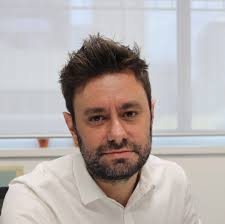
Prof. Dan V. Nicolau Jr
Chair
Prof. Dan V. Nicolau Jr
King's College London · Oxford
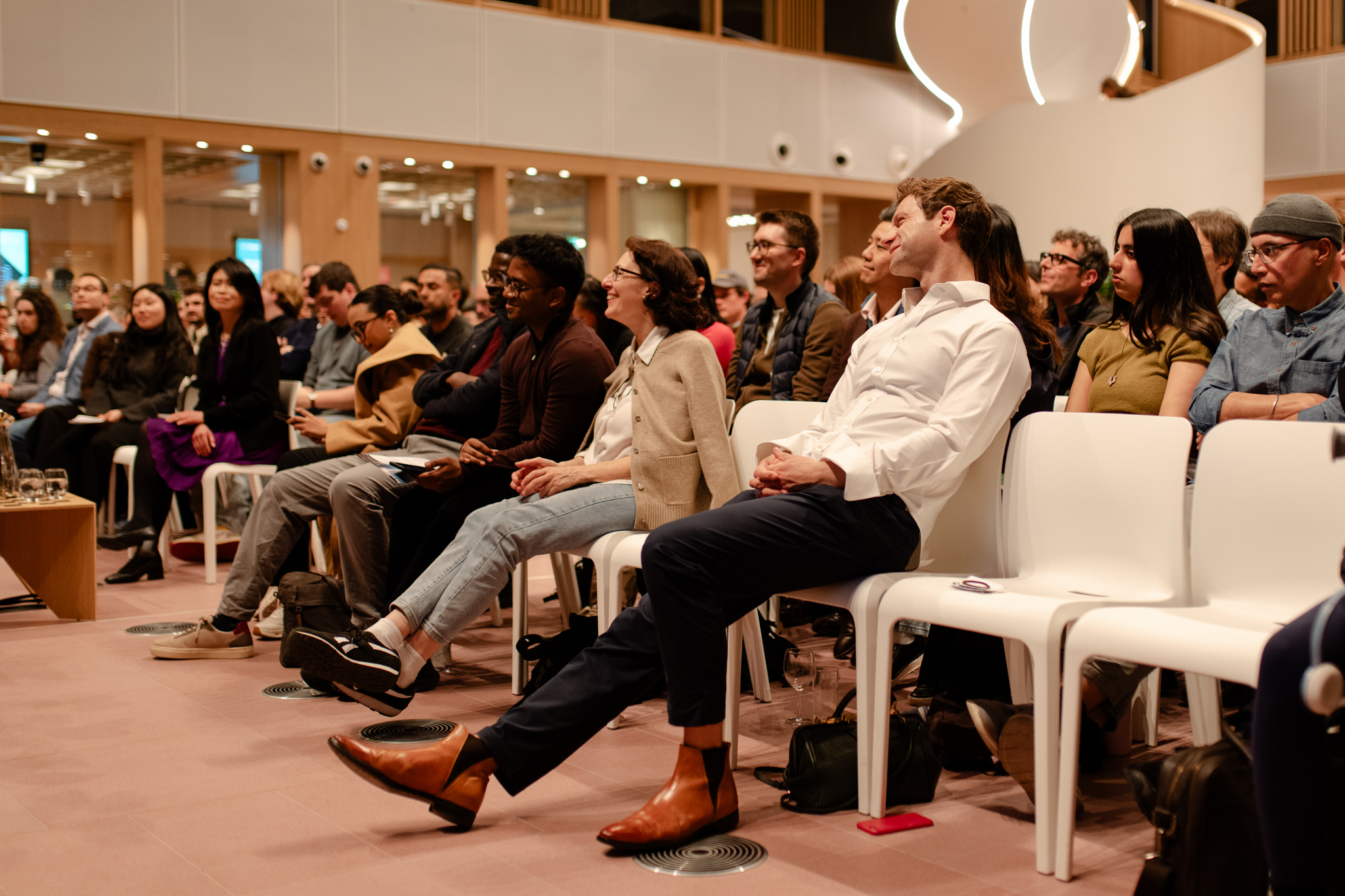
Dr Ruairidh Battleday
Chair
Dr Ruairidh Battleday
Harvard