
Representational Alignment
How biological and artificial systems represent the world and what happens when their representations diverge.
We share a world; whether we represent it in the same way is, on closer inspection, an open question. Representational alignment is the study of when, why and how two intelligent systems (biological or artificial, human or machine) converge on similar internal representations of the same phenomena and of what follows when they do not. From Plato's Sophist to contemporary comparisons of language models with human brains, the question has held interest for millennia and remains, in our experience, a fertile setting in which to bring cognitive science, computational neuroscience and machine learning into the same room. Our work engages the methods by which alignment may be measured, the conditions under which it may be cultivated and the consequences of its absence in cooperation, communication and competition.
- When and why do two intelligent systems converge on the same internal representation of the same set of facts?
- By what methods may alignment be measured and which of those methods survive contact with the data?
- Under what conditions may alignment be cultivated and at what cost?
- What are the consequences of representational misalignment for cooperation, communication and competition?
Conferences
Representational alignment was a session of the Fourth Annual Conference and remains a recurring theme; at the AE Global Summit it appears wherever the institutions of measurement come up against the systems they are asked to evaluate.
Spotlight - Neural Networks Reveal a Cognitive Continuum Toward Human Abstraction
Spotlight talk by Li Wenjie presents "Neural Networks Reveal a Cognitive Continuum Toward Human Abstraction" Abstract - Neural networks stru…
Watch →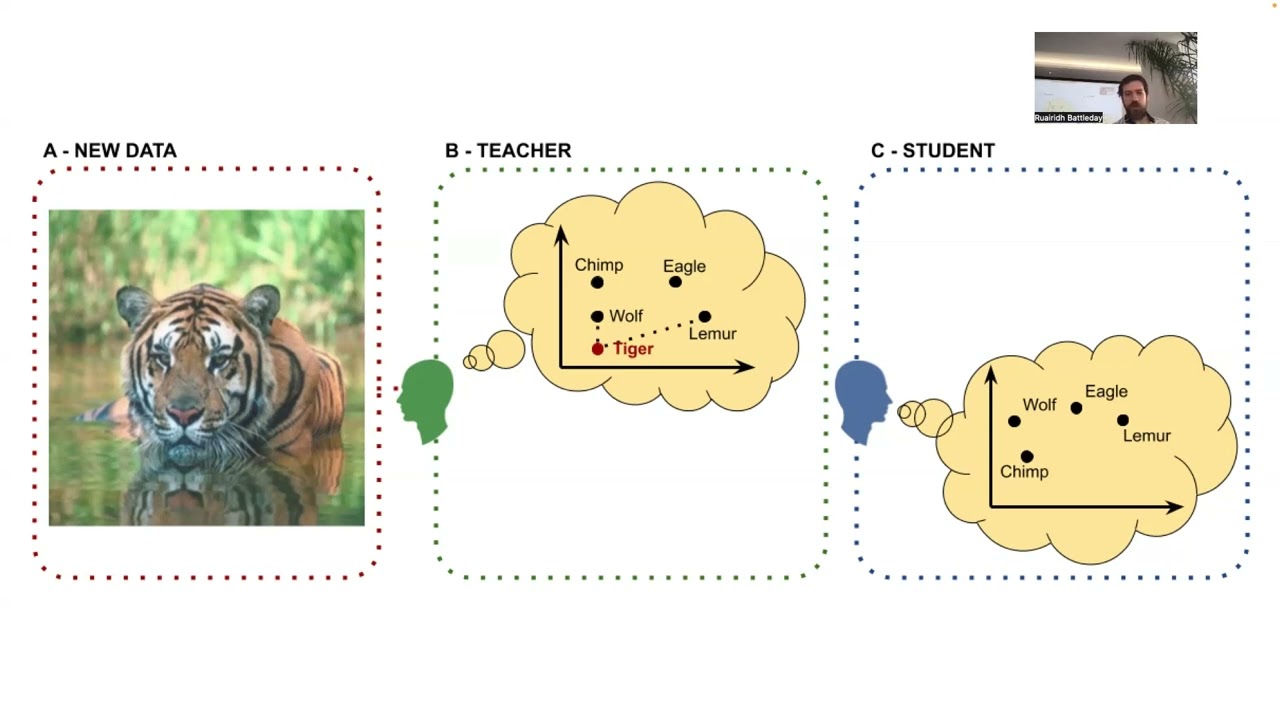
Dr Ilia Sucholutsky - How and why we should study representational alignment
A recent model of neural summation, the intrinsically nonlinear receptive field (INRF), has shown very promising results in overcoming the l…
Watch →
Dr Michael Popov - Round Numbers and Representational Alignment. Fundamental of Ramanujan’s theorems
Humans build not only the models of external reality but also the models of subjective experience (unconscious, imaginary feelings, inner st…
Watch →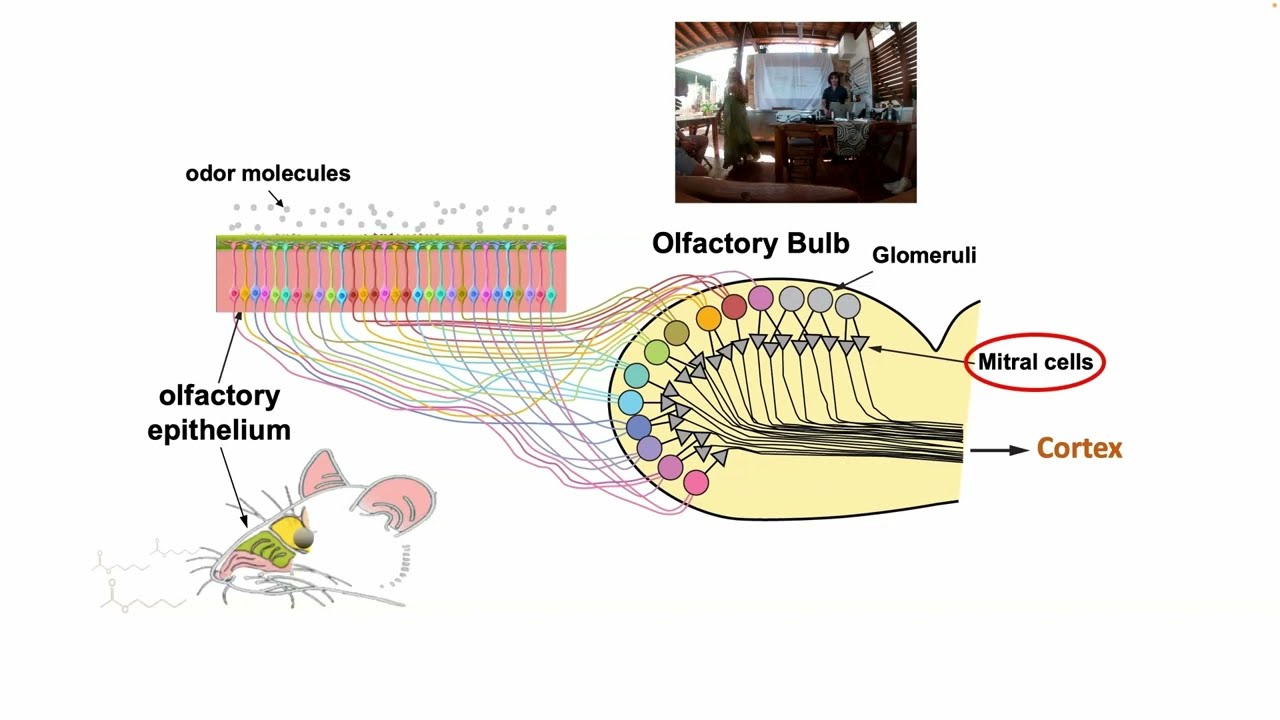
Dr Jonathan V Gill - The geometry and role of sequential activity in olfactory processing
Animals depend on their senses for survival. Mice, who rely on olfaction to navigate the world, can rapidly identify odours within a single…
Watch →ThAT Ambassador Programme
The Thinking About Thinking Ambassador Programme is an open, application-based pathway for students and early-career researchers who wish to take part in serious, interdisciplinary conversations about intelligence. Ambassadors support our conferences, workshops, and community initiatives; in turn, they help to extend thoughtful dialogue across universities, disciplines and countries. The programme is designed for those who care, in earnest, about ideas, collaboration, and the construction of intellectual community.
Outstanding ambassadors who, over time, demonstrate sustained contribution, leadership and intellectual engagement may, in due course, be invited into the Thinking About Thinking Fellowship, a private, invitation-only programme reserved for long-term contributors to the work.