
Mathematics & Theory
The formal structures that govern learning, generalisation and inference.
We bring together researchers in applied mathematics, statistics, information theory, optimisation, theoretical computer science and related formal sciences. They study the structures that govern how systems learn, represent information, generalise and fail. The focus is limits: what's possible in principle, what's provably impossible, and where current theory breaks down. A lot of the confusion in the field sits in the gaps between those.
- What mathematical principles govern learning, generalisation and inference?
- Where do formal guarantees end and where must empirical investigation begin?
- What roles do information theory, optimisation and dynamical systems play in modern learning?
- How do we reason rigorously about systems we can't fully inspect?
Conferences
Mathematics and theory are central to our peer-reviewed conference, the International Conference on the Mathematics of Neuroscience and AI. At the AE Global Summit, they come up whenever a claim about what a system can do runs into formal limits.

Spotlight- Dynamical systems principles underlie the ubiquity of biological data manifolds
Spotlight talk by Dr Arthur Pellegrino presents "Dynamical systems principles underlie the ubiquity of biological data manifolds" Abstract -…
Watch →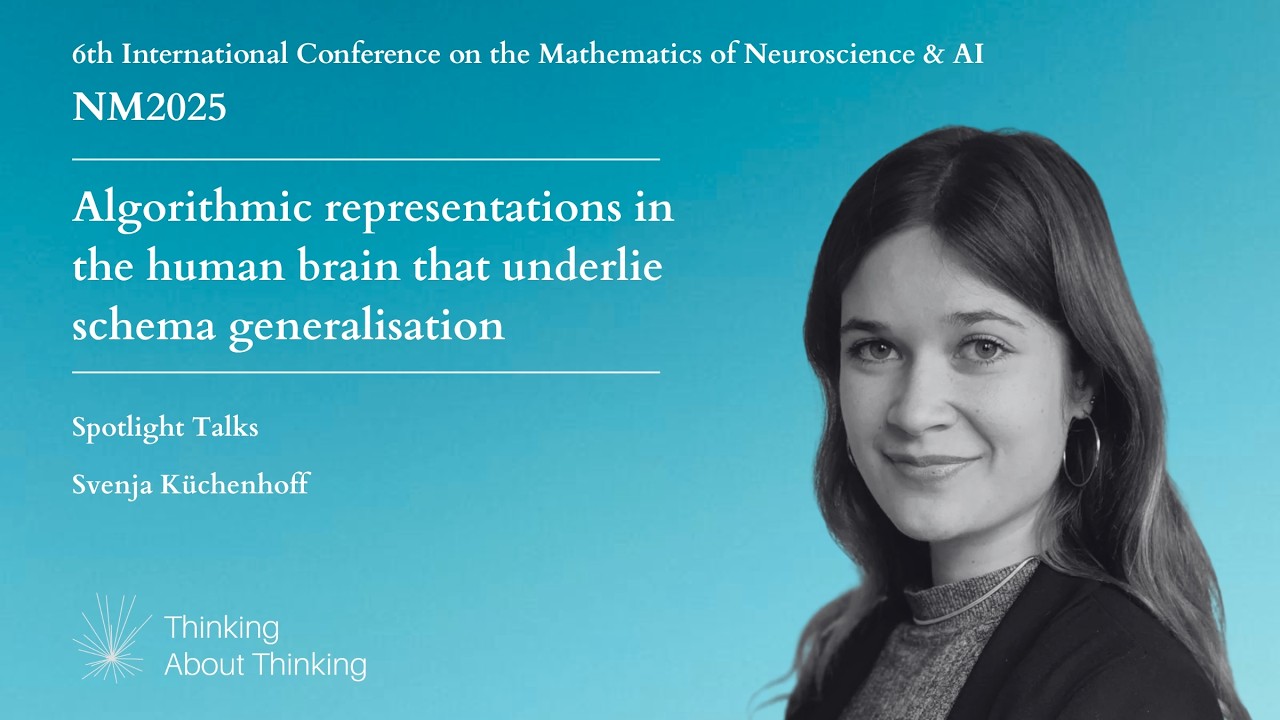
Spotlight - Algorithmic representations in the human brain that underlie schema generalisation
Spotlight talk by Svenja Küchenhoff presents "Algorithmic representations in the human brain that underlie schema generalisation" Abstract -…
Watch →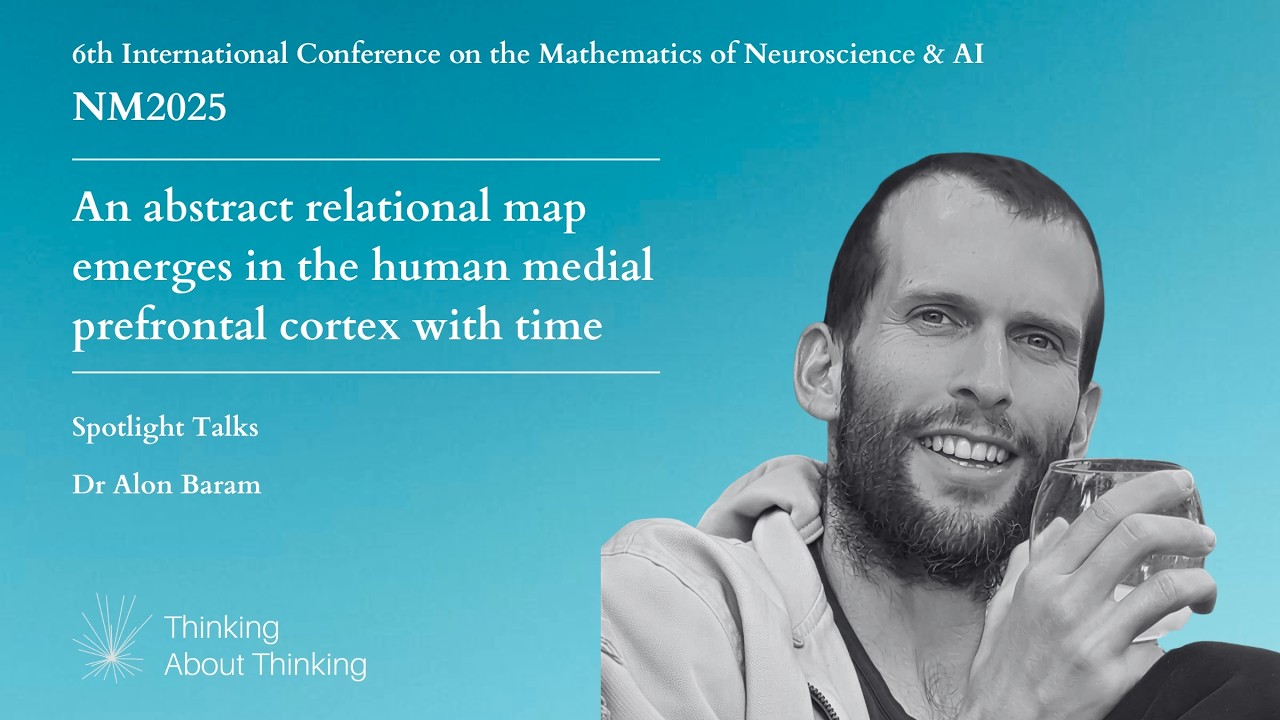
Spotlight - An abstract relational map emerges in the human medial prefrontal cortex with time
Spotlight talk by Dr Alon Baram presents "An abstract relational map emerges in the human medial prefrontal cortex with time" Abstract - It…
Watch →
Spotlight - Invariant probabilistic representations in neural networks
Spotlight talk by Ishan Kalburge presents "Invariant probabilistic representations in neural networks" Abstract - While mounting evidence in…
Watch →
Spotlight - Collective Moral Reasoning in Multi-Agent LLMs
Spotlight talk by Dr Anita Keshmirian presents "Collective Moral Reasoning in Multi-Agent LLMs" Abstract - As artificial intelligence system…
Watch →
Spotlight- Uncertainty in latent representations of variational autoencoders for visual tasks
Spotlight talk by Domonkos Martos presents "Uncertainty in latent representations of variational autoencoders optimized for visual tasks" Ab…
Watch →ThAT Ambassador Programme
The Thinking About Thinking Ambassador Programme is open to applications from students and early-career researchers who want to work on intelligence across fields. Ambassadors help run our conferences, workshops and community projects, and bring their universities and countries into the network.
Ambassadors who contribute and lead over a longer period may be invited into the Thinking About Thinking Fellowship. The Fellowship is invitation-only and is for long-term contributors.