Two decades into the 21st century, how close are we to a unified mathematical model of intelligence?
In this exploratory symposium, we invite submissions presenting mathematical models of brain function or computational ideas about intelligence. We give priority to those models that can account for brain or behavioural data, or state-of-the-art results in artificial intelligence on naturalistic tasks.
One of the major scientific projects of the 20th century was the study of computation. We could build devices that could carry out some of the operations previously only possible in the human mind. This analogy and perspective has proven extremely productive, with neural and cognitive theories inspiring the development of powerful algorithms and vice versa in the computational study of the brain and mind.
In this convention, we aim to identify and develop novel computational frameworks for the study of the brain and mind and take those findings back into the creation of novel algorithms for solving difficult problems and simulating intelligence.
Our content comes from four main fields: neural data, neural theory, cognitive science and machine learning/artificial intelligence (AI). Each of these fields has developed a distinct computational language and set of concepts pertaining to a set of overlapping underlying principles.
By bringing leading researchers together from these fields together in on-line and off-line settings, we aim to build bridges between them, such that novel findings, insights and frameworks can take spark.
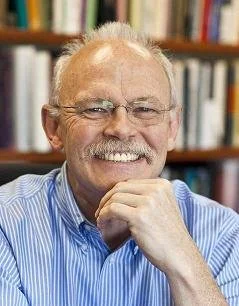
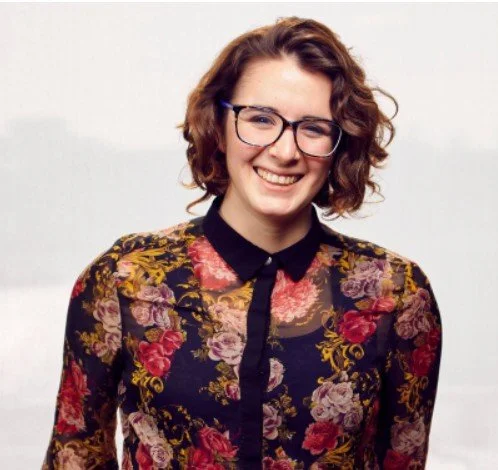
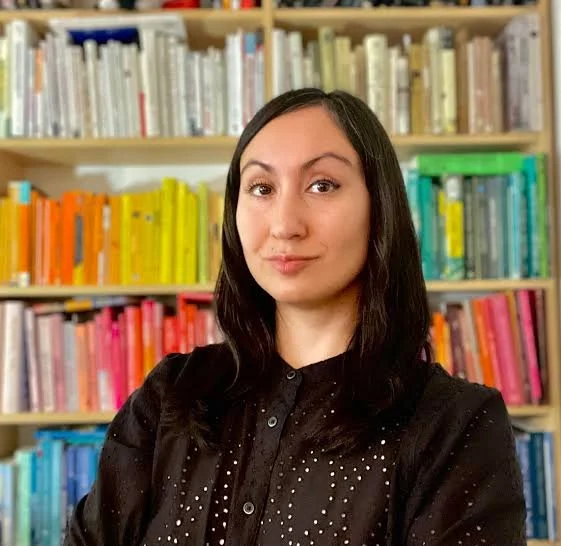
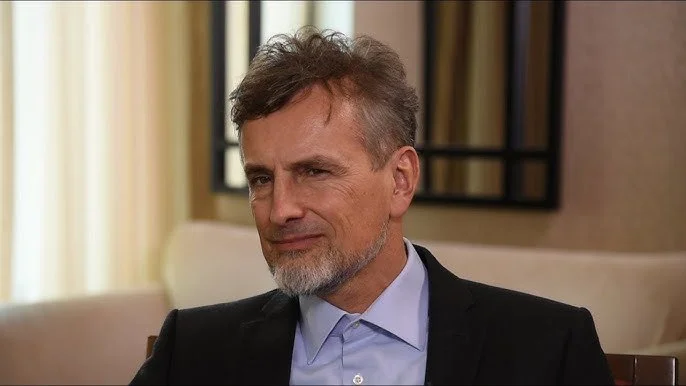
Neural Data
The neural basis of cognition is not going to be solved by maths alone. We need rich behavioural data and flourishing collaborations between experimentally and theoretically minded folk. In this session, talks will explore new and exciting neural data—whether it be fMRI, electrophysiology, or otherwise—that may or may not yet have an explanation, with a particular focus on data that points to new computational paradigms in brain processing.
- Dr Valeria Fascianelli (Zuckerman Institute, Columbia)
- Dr Francesca Mignacco (Princeton)
- Professor Wolfgang Maass (Technische Universität Graz)
- Professor Eve Marder (Brandeis University)
- Professor Alex Cayco-Gajic (ENS)
- Dr Jenelle Feather (Flatiron Institute)
- Dr. Joao Barbosa (Institute for Neuromodulation)
- Dr. John Vastola (Harvard University)
- Isabel M Cornacchia (University of Edinburgh)
- Philipp Werthmann (Institute for Neuromodulation)
- Rajat Saxena (Norwegian University of Science and Technology)
- Svenja Küchenhoff (University of Oxford)
- Alon Baram (University of Oxford)
- Ruben Tammaro (University of Tübingen, Germany)
Neural Theory
While neuroscientists have increasingly powerful deep learning models that predict neural responses, it is not clear that these models are correspondingly increasing our understanding of what neurons are actually doing. In this session, we will take a more mechanistic approach to understanding how networks of neurons afford complex computations, both by considering mechanistic neural models along with mathematical theories that say how neurons should behave and crucially why they behave that way.
- Dr James Whittington (University of Oxford; Stanford University)
- Yasmine Ayman (Harvard)
- Professor Christine Constantinople (New York University)
- Dr Juan Gallego (Imperial)
- Professor Vijay Namdoodiri (Weill Institute for Neurosciences, UCSF)
- Professor Annegret Falkner (Princeton Neuroscience Institute)
- Dr Francesca Migancco (Princeton University)
- Dr Valeria Fascianelli (Columbia)
- Dr Chris Hillar (New Theory AI)
- Jesseba Fernando (Northeastern University)
- Albert Albesa Gonzalez (Imperial College London)
- Dr Alexander Rivkind (Cambridge)
- Joseph Warren (Sainsbury Wellcome Centre - UCL)
- Samuel Liebana (UCL)
Cognitive Science
How should an intelligent agent behave in order to best realize their goals? What inferences or actions should they make in order to solve an important computational task? Cognitive science aims to answer these questions at an abstract computational level, using tools from probability theory, statistical inference and elsewhere.
In this session we will discuss how such optimal behavior should change under different conditions of uncertainty, background knowledge, multiple agents, or constraints on resource. This can be used to understand human behavior in the real world or the lab, as well as build artificial agents that learn robust and generalizable world models from small amounts of data.
- Dr Ruairidh Battleday (Harvard/MIT)
- Dr Colin Conwell (Harvard/MIT)
- Dr Kim Stachenfeld (Google DeepMind)
- Dr Ida Momennejad (Microsoft Research)
- Professor Bonan Zhao (Edinburgh)
- Professor Lisa-Marie Vortmann (University of Groningen)
- Dr Mathias Sablé-Meyer (Harvard / MIT)
- Dr. Dan Nicolau (King's College)
- Professor Eran Eldar (Hebrew University of Jerusalem)
- Aslan Satary Dizaji (University of Michigan)
- Ishan Kalburge (University of Cambridge)
- Kai Sandbrink (University of Oxford)
- Dr Paxon Frady (UC Berkeley)
- Li Wenjie (Carnegie Mellon Univeristy)
- Dr Anita Keshmirian (Forward College Berlin)
Artificial Intelligence
Machine learning and artificial intelligence (AI) aim to create algorithms that solve difficult problems and simulate complex intelligent behavior. Many of these algorithms are based on findings and theory from the study of the brain and mind.
Recent rapid advances in these fields have seen the creation of algorithms and agents that can—finally—solve complex real-world problems across a wide range of domains. What are these advances and how can we take them further? What remains beyond their capacity and how can we overcome that? What might forever lie beyond their capabilities—or will anything?
- Michael Lepori (Brown University)
- Dr Ivana Kajic (Google DeepMind)
- Professor Jay McClelland (Director, Center for Mind, Brain, Computation and Technology, Stanford)
- Professor Juergen Schmidhuber (Director, KAUST AI Initiative)
- Dr Chen Sun (Google DeepMind)
- Dr Ivana Kajic (Google DeepMind)
- Dr Naomi Saphra (Harvard)
- Can Demircan (Helmholtz Munich)
- Professor Constantine Dovrolis (The Cyprus Institute / Georgia Tech)
- Dr Venkatakrishnan Ramaswamy (Birla Institute of Technology & Science Pilani)
- Andrea Albert (HUN-REN Wigner Research Centre for Physics)
- Domonkos Martos (HUN-REN Wigner Research Centre for Physics)
- Jack Brady (Max Planck Institute for Intelligent Systems)
Tues 27th May 2025 (UTC+1)
Weds 28th May 2025 (UTC+1)
Thurs 29th May 2025 (UTC+1)
Fri 30th May 2025 (UTC+1)
Neuromonster Arts Salon
You're coming to Croatia for science. But you're more than that. Bring your human side, the feathery thing that likes stories, art or music to our Arts Salon.
The Neuromonster Arts Salon will be an informal chance to share creative works and talk (neuroaesthetic) ideas after a day of keynotes and panels.
If you're keen to:
- -Play music
- -Give a reading of your favourite fiction, poetry, or nonfiction (related to intelligence, or not)
…or to share some other form of art you make (Painting? Graphic novel? Sculpture? Photos? Film short?) maybe with the help of AI…
Please fill in the following form to let us know a little bit more about your artistic endeavours: https://forms.gle/vUPu7XSXBMUtQFtZ6
No pressure - you can change your mind.
We look forward to seeing you all in Split!
For questions, please contact Taylor Beck at taylor{dot}beck216{at}gmail.com.
Radisson Blu Resort & Spa, Split
Our venue is the gorgeous Radisson Blu Resort and Spa in Split.
The Radisson Blu is a 45 minute walk from the Old Town, or a 20 minute bus ride.
See below for information on booking rooms at the hotel with discounted prices.